

·
October 26, 2026
Solid Dish Soap vs. Liquid Dish Soap: Which Fits Your Kitchen?
Choosing between solid and liquid dish soap doesn’t have to mean choosing a winner. Both can have a place in a practical, lower-waste kitchen.
A solid dish soap bar offers a compact format that may come with little packaging. Refillable liquid dish soap lets you keep using a familiar bottle and washing routine. The better fit depends on how you wash dishes, the formula you choose, and what you’ll comfortably keep using.
Here’s what to consider before making the switch.
What Is Solid Dish Soap?
Solid dish soap is a bar or block formulated for washing dishes by hand. Rather than squeezing soap from a bottle, you typically pick up a small amount with a wet brush, sponge, or cloth, following the product’s directions.
Not every soap bar is intended for dishes. Choose a product specifically labeled for dishwashing, and check its instructions for suitable uses.
A dish block can work well if you like keeping your sink area simple. You’ll need a spot where it can drain and dry between uses, rather than sitting in water.
What Is Refillable Liquid Dish Soap?
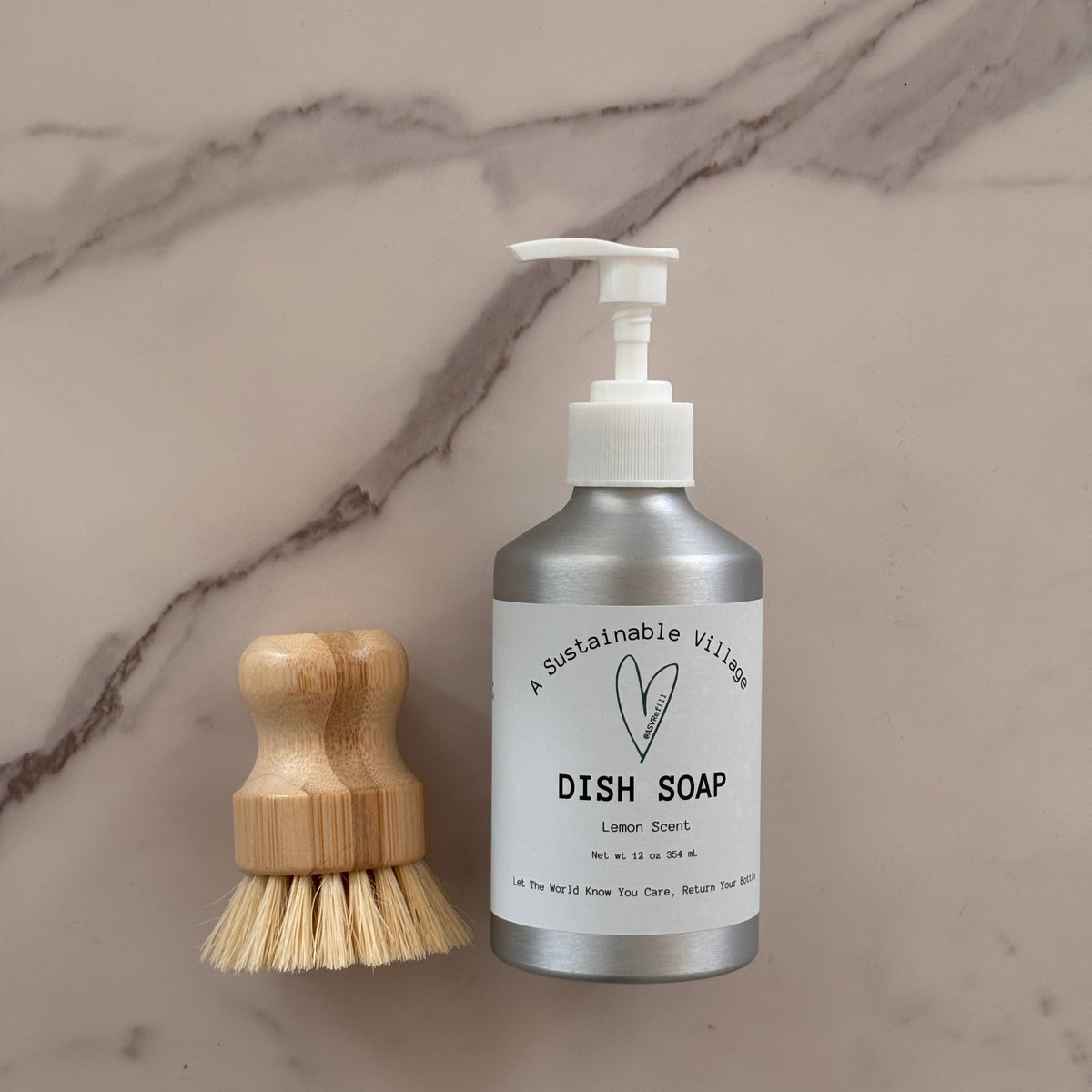
Refillable liquid dish soap works within a familiar routine: dispense the recommended amount, wash, and rinse according to the product’s directions.
The difference is what happens when the bottle runs low. Instead of buying another disposable bottle, you refill a suitable container.
You can keep using a bottle you already own. There’s no need to replace useful plastic packaging with glass just to start refilling.
If you’re changing formulas, ask about preparing your container rather than mixing leftover products together.
How Do You Use Each Format?
With a solid dish soap bar, follow the maker’s directions for loading soap onto your cleaning tool. Start with a small amount and add more as needed. Afterward, rinse your tool and leave the bar somewhere it can dry.
With liquid dish soap, check whether the directions call for adding it to a sink of water or applying it to a cleaning tool. Measure or dispense thoughtfully rather than assuming more soap means better results.
Neither hand-dishwashing format should go in an automatic dishwasher unless the product is specifically labeled for that use.
Which Is Better for Cleaning Greasy Dishes?
The format alone doesn’t tell you how well a product will handle grease. Formulation, the amount used, your cleaning tool, and the way you wash all matter.
Check the product’s intended uses and follow the care instructions for your cookware. A suitable brush or scrubber can help with stuck-on food, but not every tool belongs on every surface.
If you’re trying a new soap, start with everyday dishes and see how it fits your routine. Avoid assuming that more bubbles automatically mean a better clean.
Which Takes Up Less Space?
A solid bar can be convenient for a small sink area, provided you have a draining dish or holder that fits.
A liquid soap bottle may work better if you already have a dispenser you like. Refilling that bottle lets you maintain your setup without adding another accessory.
Think about the whole arrangement, not just the soap. A compact bar surrounded by several new tools isn’t necessarily simpler than one bottle and a brush you already use.
Which Costs Less?
There isn’t a universal answer. Price, product size, concentration, and how much you use all affect value.
For liquid dish soap, compare prices using the same units and consider any dilution instructions. For a solid bar, consider its weight, price, and the maker’s usage guidance.
Avoid relying on claims that one bar replaces a fixed number of bottles unless the comparison clearly explains the bottle size and usage assumptions.
The most useful comparison is what each option costs in your own routine over time.
Which Creates Less Packaging Waste?
A minimally packaged dish bar can help you avoid buying another liquid soap bottle. Refilling liquid dish soap can also reduce the need for new containers.
Look at the actual product and refill system rather than assuming every bar is plastic-free or every refill uses no packaging.
If you already own a working bottle, keeping it in use is a sensible starting point. If you prefer a bar, choose storage that helps you use it fully.
Neither option needs to become an excuse to throw away supplies that still work.
Choose Solid Dish Soap If…
A bar may suit you if you enjoy applying soap directly to a brush or sponge, prefer a compact format, and have somewhere to let it drain.
It’s also worth considering if you want to try a different sink setup without committing to a collection of new accessories.
Start with one bar and a suitable tool you already own, where possible.
Choose Refillable Liquid Dish Soap If…
Liquid may suit you if you like your existing routine, already have a useful bottle, and can conveniently refill it.
It can be an approachable first refill because there’s little to relearn. Bring a clean, suitable container and ask about the formula’s directions before filling.
A lower-waste habit is easier to maintain when it fits the way you already live.
You Don’t Have to Switch Everything
You might prefer a bar for everyday washing and liquid for another task, or discover that one format works well for all your handwashing needs.
Finish what you have before replacing it. Choose based on performance, convenience, budget, and packaging rather than pressure to build a perfectly coordinated kitchen.
The goal is clean dishes and a routine you’ll keep using.
Find Your Kitchen Routine at A Sustainable Village
Curious about dish blocks or ready to refill your liquid dish soap? Visit A Sustainable Village at 50 University Place, New York, NY 10003.
Tell us how you wash dishes and what you already use. We can help you explore the current selection and understand the care instructions before you choose.
Keep the useful bottle. Try the bar if you’re curious. Build your routine one practical step at a time.