

·
December 27, 2025
NYC Zero-Waste 101
Essential Practices for Zero-Waste Living
Living in New York City often presents unique challenges when pursuing a zero-waste lifestyle. The city’s culture of convenience, with single-use plastics and disposable solutions at every turn, can make sustainable living seem daunting. However, with a few practical strategies, we can significantly reduce our environmental footprint even within the constraints of New York's fast-paced environment.
Start by Composting in NYC
Organic waste accounts for about one-third of the city’s trash. Composting food scraps is an effective way to prevent methane emissions and produces nutrient-rich soil to support urban gardens. Recent change in NYC law has made composting easy and accessible. The Department of Sanitation (DSNY) requires many residential buildings to use orange-lidded, brown bins for all food scraps (including meat and dairy) and food-soiled paper. If your building lacks a compost bin, use the NYC Compost app to locate and unlock Smart Bins—orange "Smart Compost" stations around the city—for easy food scrap drop-off. Community organization such as the LES Ecology Center provide compost pick up a few times a week at farmers’ market like the one at Union Square Park. Community bins don’t accept meat or dairy, so check accepted materials list before leaving your scraps.
- Pro-Tip: Store your food scraps in a sealed container or silicone bag in the freezer. This helps eliminate odors and fruit flies, making the trip to the drop-off site much cleaner and more manageable.
Grocery Shopping in NYC
To minimize plastic waste while shopping for groceries, make it a habit to bring your own shopping and produce bags every time you go to the store. Keeping extra produce bags in your tote ensures you always have a backup, making it easier to avoid single-use options. If you ever forget your produce bags, resist the urge to use disposable alternatives. Simply put your produce directly in your cart and transfer them into your shopping bag when you check out.
Shopping at local farmers’ markets is another effective way to lower our waste and carbon footprint. By choosing to buy goods directly from local vendors, we reduce the distance our food travels and support small-scale, sustainable agriculture. Farmer's markets typically offer seasonal and unpackaged goods, allowing us to use our own reusable produce bags or containers and avoid unnecessary plastic packaging. This simple habit not only helps minimize waste but also connects us to our community and the people who grow our food. Grown NYC host greenmarket and farmstand throughout the city. Check their website for location and schedule.
How Refill Works
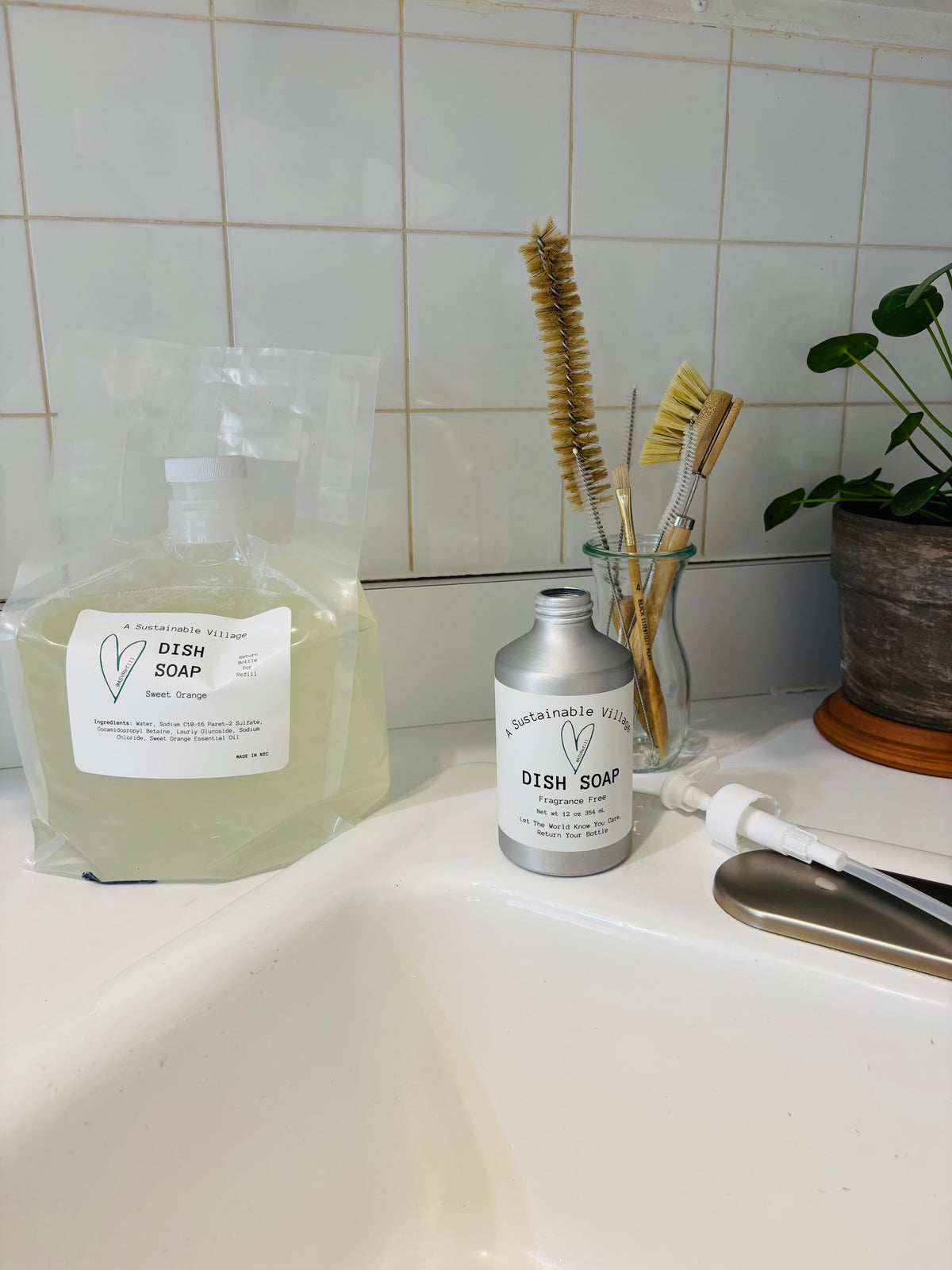
Further reduce waste by breaking up with single-use packaging, and start refilling on your essentials. To shop at a refill store, bring a clean, dry container—such as a dish soap bottle, glass jar, or detergent jug. The store associates will weigh the container, after which you fill it with the product you need. You then pay for only the amount you take and are ready to go. For assistance, just ask a shop associate. You can search here for a list of refills and zero waste shops near you.
Small changes in daily habits can lead to significant reductions in waste. Incorporating the below "Quick Wins" into your routine is a practical way to make sustainable living easier.
The "No Utensils" Rule When ordering food for delivery, always select the "No Plastic Cutlery" option in your delivery apps. This simple step helps you avoid unnecessary single-use items and prevents plastic utensils from accumulating at home. By opting out, you support a culture of less waste and encourage restaurants to rethink their default packaging.
Carry a "Go-Kit" A reusable tote bag, lightweight water bottle, and coffee tumbler are essential for city living. By keeping these items with you, you can easily decline single-use plastics throughout your day. Over the course of a year, these simple tools can eliminate hundreds of disposable items, making a noticeable difference in your personal waste output.
Zero-Waste Living in NYC is not about achieving perfection but rather making progress within the city’s existing systems. Visit us (50 University Place) to learn more about how easy and rewarding a refillable, zero-waste lifestyle can be.
— The Team at A Sustainable Village